Related: Best Microphone for a Noisy Apartment
I have edited more than 4,000 episodes for other people. That number is not a boast, it is a diagnosis. I have heard every microphone mistake a person can make, most of them twice, and the expensive mistakes almost never come from the microphone itself. A podcast microphone setup is a small system, not a shopping list, and in a good system every piece has a job. The cheapest piece is usually doing the most work.
That is why I do not start with a frequency response graph. I start with the room, then the pickup pattern, then the mount, and only then the capsule. Most people build it backward, then buy a fourth microphone to fix a problem that a moving blanket and a boom arm would have solved for less money.
The four pieces below cover four different jobs. The daily mic that sits on the desk and gets used every single day. The wireless pair for two people who will not sit still. The PA system for the room where "quiet" is not on the menu. And the boring hygiene item nobody puts in a listicle. Different jobs, different gear, and none of them is an upgrade to any of the others.
The daily driver: TONOR Dynamic Podcast Microphone
If you are building a first podcast microphone setup, this is the shape of the answer: a dynamic, cardioid capsule with both XLR and USB output. Dynamic means it wants real gain and gives you back a low noise floor in a room you have not treated. Cardioid means it listens mostly in front of you and rejects some of the street, the refrigerator, and the fan in the next room. Dual output means you can start on USB today and move to an interface later without buying a new microphone.
That last point matters more than people admit. I have watched too many creators buy a USB-only mic, outgrow it in a year, and start over from zero. A mic with both paths lets you keep the same capsule while the rest of your chain grows up around it. That is the opposite of the upgrade treadmill.
What to expect from a mic in this class: proximity effect, which is the bass build-up you get when you work close, and which you can use on purpose once you learn it. Plosives, which is what a pop filter is for. And a voice that sits in a mix without much EQ, because a dynamic capsule is not chasing air frequencies it cannot deliver in a bedroom.
The catch is gain. A dynamic mic needs more of it, and cheap interfaces get noisy when you push them. If you record at a normal speaking volume with the gain high and you hear hiss underneath your room tone, the mic is not the problem. Fix the gain staging or fix the interface before you blame the capsule.
For two people who move around: Phenyx Pro Dual UHF Wireless System
Handheld wireless is not the best sound. It is the best sound available when two hosts want to stand up, walk to a whiteboard, and hand a mic to a guest without a cable pulling a laptop off the table. A dual-channel UHF system with auto scan is built for exactly that: two handheld transmitters, one receiver, and a scan function that finds you a clear frequency instead of making you guess.
UHF matters for a reason people learn the hard way. The 2.4 GHz band is crowded with wi-fi, and a dropout in the middle of a sentence is not something you can repair in the edit. UHF has more room to move, and auto scan matters for the same reason. If you record in a different room every week, the interference changes every week. A system that finds a clean channel for you is worth more than a system with a nicer spec sheet.
One honest note: handheld mics reward technique. Hold the capsule three to six inches from your mouth, keep it slightly off axis so plosives miss the grille, and keep your hand off the grille entirely. Cupping a handheld is how you get a muddy, boomy mess and a feedback risk in a live room. Off-axis rejection only helps you if you let the mic do its job.
When the mic is really a PA system: Pyle Karaoke Portable PA
There is a category of creator who does not need a studio mic at all. They need to be heard by a room. A 15-inch powered PA speaker with Bluetooth, a rechargeable battery, carry wheels, USB and RCA inputs, FM radio, and two wireless handheld mics is a completely different animal from a podcast microphone, and pretending otherwise is how people waste money.
This is the gear for the school event, the backyard party, the pop-up market, the family reunion, the karaoke night, the announcement at the finish line. It runs on its own battery, it rolls on its own wheels, and it arrives with the two mics you would otherwise have to buy separately. For that job it is not a compromise, it is the correct tool.
What it will not do is give you a clean voice track. A 15-inch woofer and a horn are voiced for coverage and volume, not for a close-mic'd narration. If your plan is "I will record my podcast through the PA," please do not. If your plan is "I need forty people to hear the toasts," this is the right purchase and a studio mic is the wrong one.
The boring essential: Amazon Basics 70% Isopropyl Alcohol
Every handheld mic in this guide gets touched by more than one mouth. That is the entire argument for keeping a bottle of 70% isopropyl alcohol in the kit. It is sold as an unscented first aid antiseptic, 32 fluid ounces, and it lives in my bag for one reason: wiping down mic bodies and grilles between users.
Two rules. Never pour or spray liquid into a capsule. Dampen a cloth or a swab, wring it out, and wipe the surface. Then let everything dry completely before the mic goes back in the case. Alcohol and a live capsule do not mix, and a soaked grille will not sound right until it dries out.
It is not a glamorous line item. It is the one that keeps a shared mic usable.
How I evaluate gear before it goes in a guide
I keep spectrograms of every mic that comes through my studio, and I record all of them twice: once in a treated room, once in my untreated kitchen. The kitchen is the honest test, because most podcasters record in an untreated kitchen whether they admit it or not. A mic that only sounds good in a treated room is a mic that will disappoint most of the people who buy it.
The checks, in order:
Noise floor. I record thirty seconds of silence and look at what is sitting there. A mic that amplifies your refrigerator is a mic that will make you re-record.
Off-axis rejection. I talk at the capsule, then I talk 45 degrees off it, then I talk with a fan running. The difference tells me how much of the room I am buying along with the microphone.
Plosives and proximity effect. P's and B's at two inches, then at six. Some mics need a pop filter. Some need distance. Most need both.
Mount and handling noise. I tap the desk. I bump the stand. If the recording picks up typing, the mic is not desk-ready, no matter what the marketing says.
And the practical test: would I use this every day without thinking about it? A microphone you are afraid to use is worse than a worse microphone you actually use.
The first-gear reference table
This is the table I keep in my own notes when someone asks what to buy first. Read it by job, not by price. The right row is the one that matches how you actually record.
| Gear | What it is | Who it is for | Notes |
|---|---|---|---|
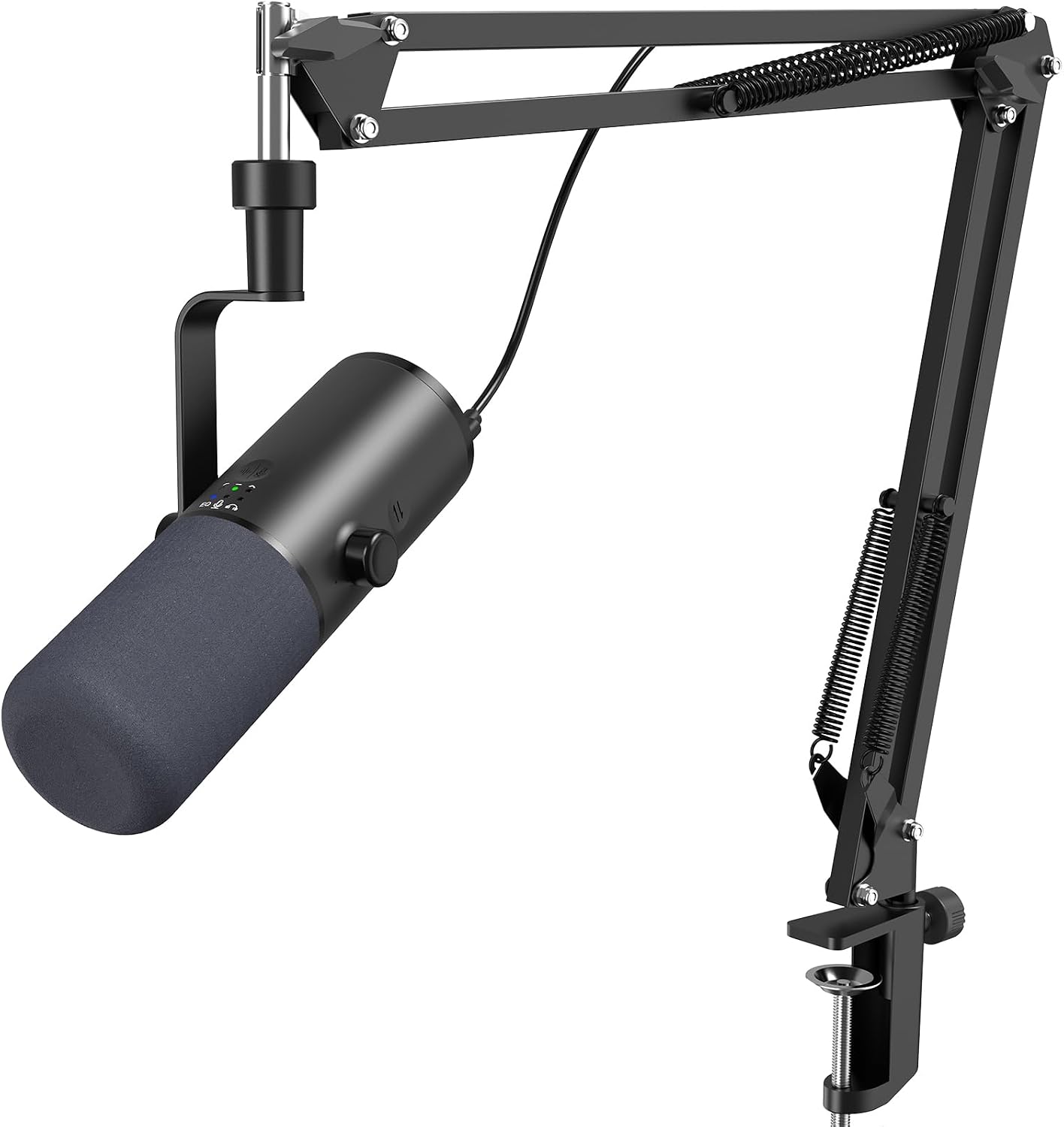 Visit on Amazon → TONOR Dynamic Podcast Microphone |
Dynamic cardioid capsule, XLR and USB output | The solo creator at a desk, every day | Start on USB, move to an interface later |
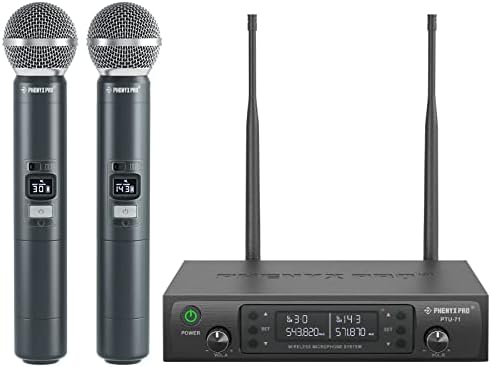 Visit on Amazon → Phenyx Pro Dual UHF Wireless System |
Two handheld transmitters, one receiver, auto scan | Two hosts who stand up and pass a mic around | Keep the grille clear and hold it off axis |
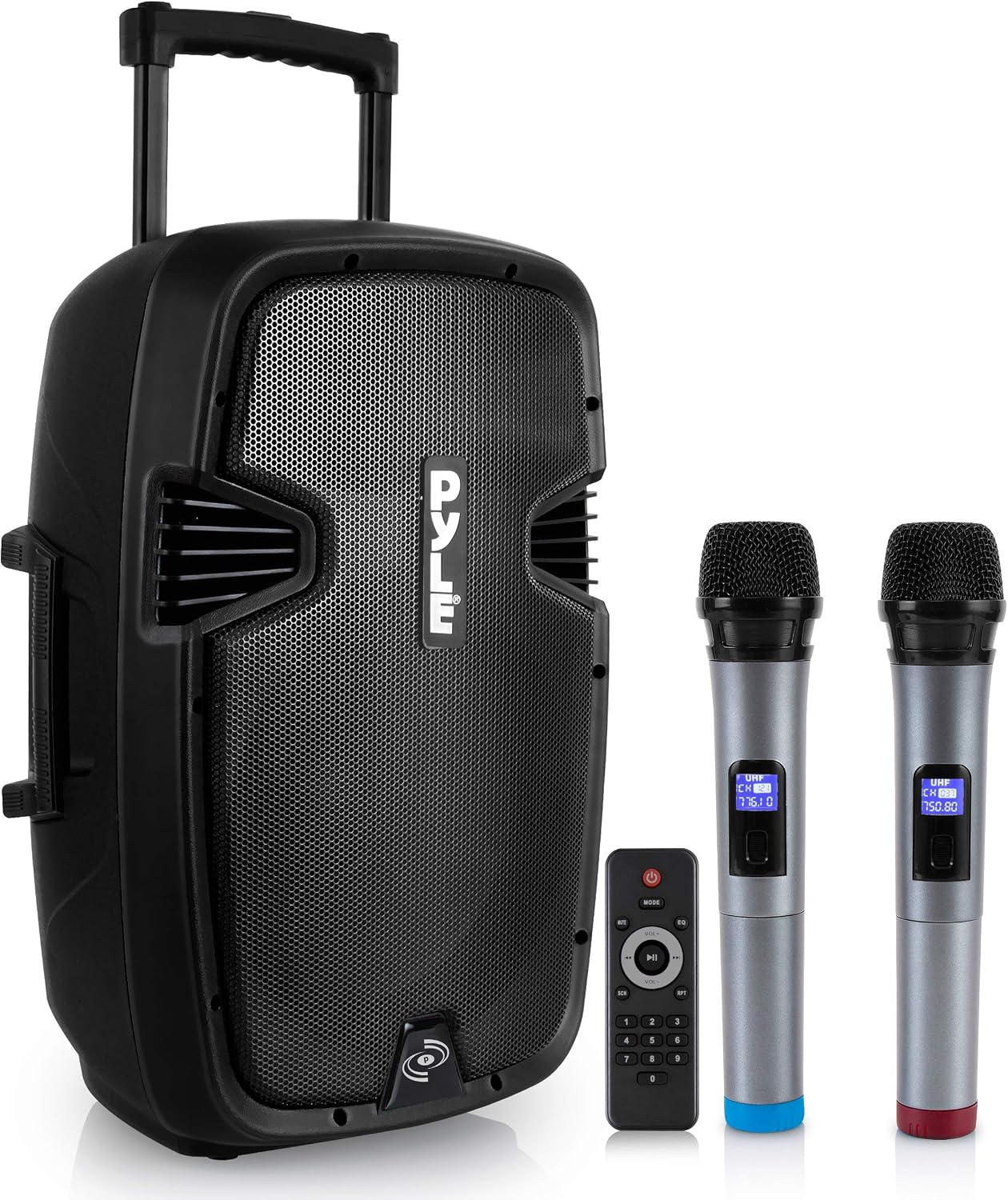 Visit on Amazon → Pyle Karaoke Portable PA |
15-inch powered speaker, battery, wheels, two wireless mics | Events, parties, karaoke, announcements | Not for recording voice tracks |
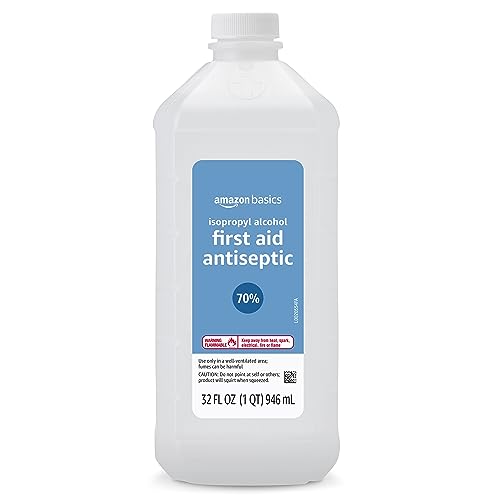 Visit on Amazon → Amazon Basics 70% Isopropyl Alcohol |
Unscented antiseptic, 32 fluid ounces | Anyone sharing a handheld mic | Dampen a cloth, never spray a capsule |
| Acoustic treatment | Blankets, panels, a closet full of coats | Everyone recording in a live room | Free if you already own a duvet |
The order in that table is not a ranking. It is a map. Most people need the first row and the last row, and nothing else.
Analysis and what the spec sheets leave out
Every piece here was chosen on the same criteria: noise floor, off-axis rejection, mount quality, and whether it survives daily use.
The pattern I see in the budget segment is consistent. USB dynamics keep eating the entry market because the software gap has closed, and the capsule gap has not. Five years ago the quality you get from a dual-output dynamic mic cost several times more and required an interface. Today the interface is optional, and that is the whole story of the last few years in creator audio.
The wireless row is the opposite lesson. It exists because of physics, not specs. If two people move, a cable is the failure point, and UHF with auto scan is the fix. If nobody moves, that row is money you should spend on a boom arm instead, because a $15 desk stand picking up typing ruins more recordings than a mediocre capsule ever will.
The PA row is about honesty. A portable powered speaker is a coverage tool. It is not a recording tool, and no amount of Bluetooth or FM radio changes that.
And the alcohol row is about the unglamorous truth: gear that gets shared needs maintenance. Clean it, dry it, store it, and it will keep working.
Should you buy the TONOR Dynamic Podcast Microphone?
Yes, if you record at a desk in a normal room and you want one mic that will not become obsolete. The XLR and USB outputs mean you can plug in today and grow into an interface later without rebuying the capsule. The dynamic cardioid design is the right pattern for an untreated room, and it will forgive a refrigerator, a street, and a roommate more than a condenser will.
What it will not forgive is bad gain staging or a cheap mount. Budget for the arm and the pop filter in the same breath as the mic.
Should you buy the Phenyx Pro Dual UHF Wireless System?
Yes, if your show has two people who stand up, walk around, or hand a microphone to a guest. Auto scan on a UHF system is the feature that saves you from dropouts in a new room, and two handhelds plus one receiver covers the standard two-host format without renting anything.
No, if everyone sits at a desk. Buy a boom arm, buy a second desk mic, and skip the wireless entirely.
Should you buy the Pyle Karaoke Portable PA System?
Yes, if your job is being heard by a crowd: karaoke, parties, school events, outdoor gatherings, announcements. The rechargeable battery, the wheels, the Bluetooth, and the two included wireless mics make it a self-contained solution for a room full of people.
No, if you are trying to record a voice track. That is a different purchase, and buying this one for that reason is how a microphone guide gets a bad review it did not deserve.
Should you buy the Amazon Basics 70% Isopropyl Alcohol?
Yes, and it costs less than almost anything else on this page. If more than one person touches your handheld mics, you need a way to wipe them down between users, and an unscented 32-ounce bottle lasts a long time.
Treat it like the tool it is: dampen a cloth, wipe the body and the grille surface, and let it dry fully before the mic goes back in the case. Never let liquid near a capsule.
The room is still the microphone. But a dynamic cardioid, a wireless pair for the people who move, a PA for the room that needs one, and a clean cloth will get you further than the next upgrade you are already shopping for.