I've been editing podcasts for over a decade, and I've mixed more gaming streams than I can count. The marketing copy on streaming mics would have you believe you need a ~$300 condenser to sound "professional," but I've learned the opposite.
The best microphone for streaming is the one that ignores your mechanical keyboard, your roommate's TV, and the hum of your PC fans.
I've owned and tested most of the mics on this list for years, not weeks. Here's the truth: the best microphone for streaming isn't the most expensive one, it's the one that makes my editing job easier.
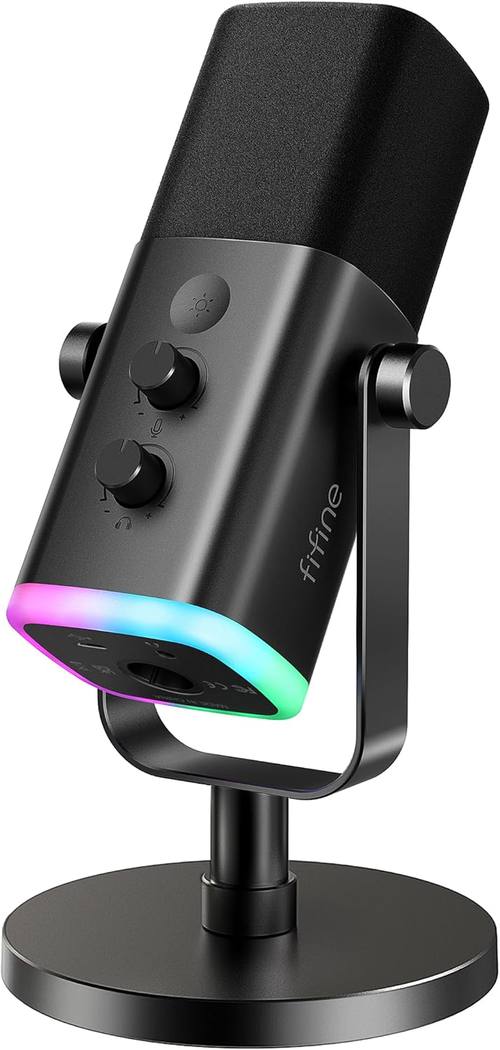
FIFINE AmpliGame AM8 USB/XLR Dynamic Microphone for Gaming Streaming
Dynamic cardioid pattern rejects keyboard clicks better than mics twice the price
Visit on Amazon →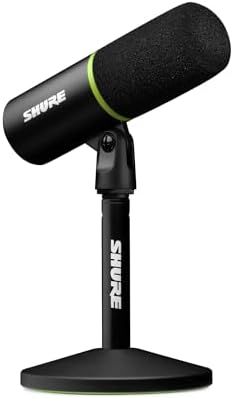
Shure MV6 USB Gaming Microphone for Streaming & Recording
The Shure MV6 USB Gaming Microphone is designed for gamers, streamers, podcasters, and creators who want professional sound with easy setup. Featuring Voice Isolation Technology and a dynamic cardioid
Visit on Amazon →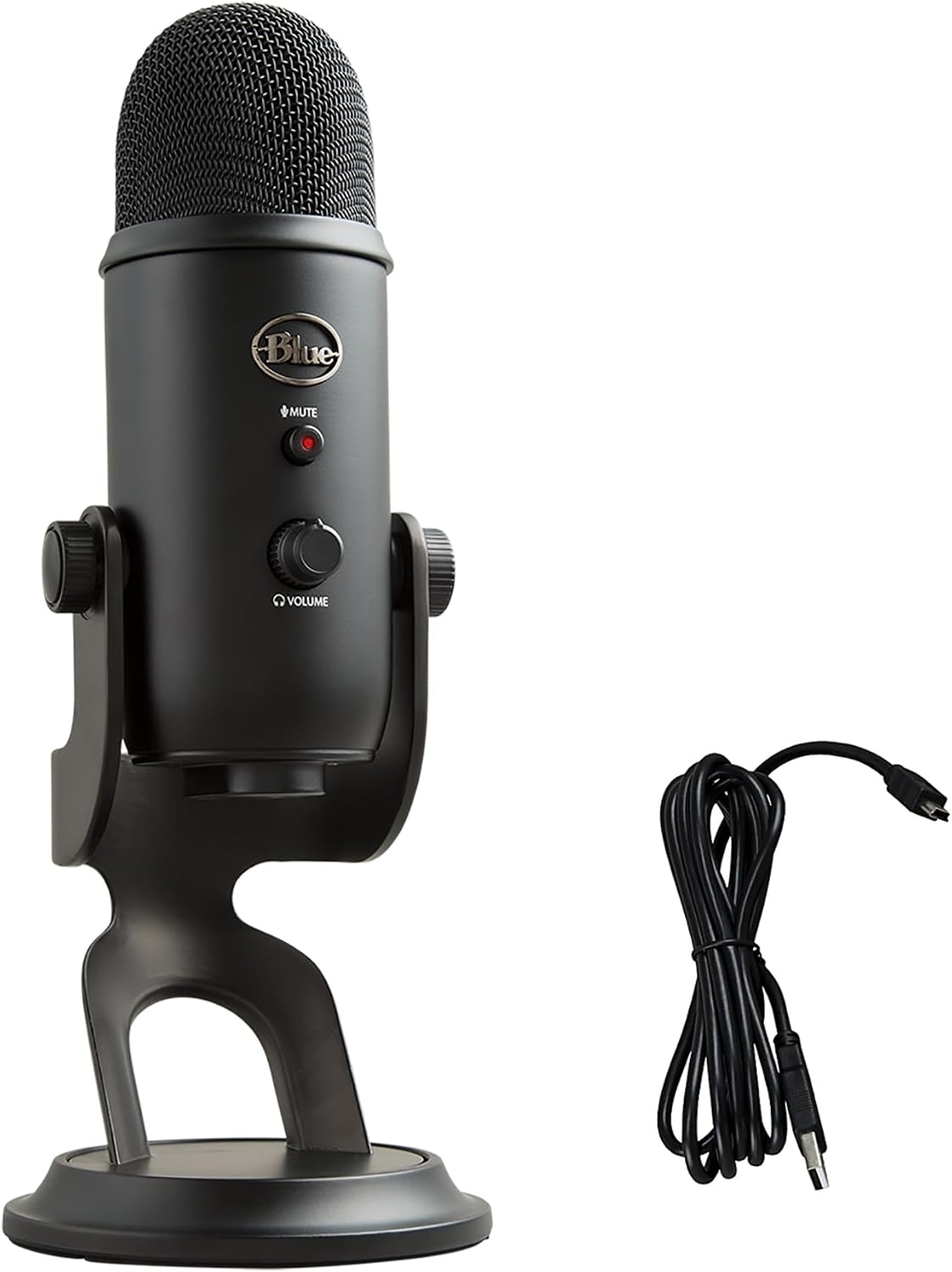
Logitech Creators Blue Yeti USB Microphone for PC, Mac, Gaming, Recording, Streaming, Podcasting, Studio and Computer Condenser Mic with Blue VO!CE effects, 4 Pickup Patterns, Plug and Play - Blackout
Yeti is a premium USB microphone, producing clear, powerful, broadcast-quality sound suitable for content creator essentials such as music, podcasts, Twitch streaming, YouTube videos, and Zoom calls.
Visit on Amazon →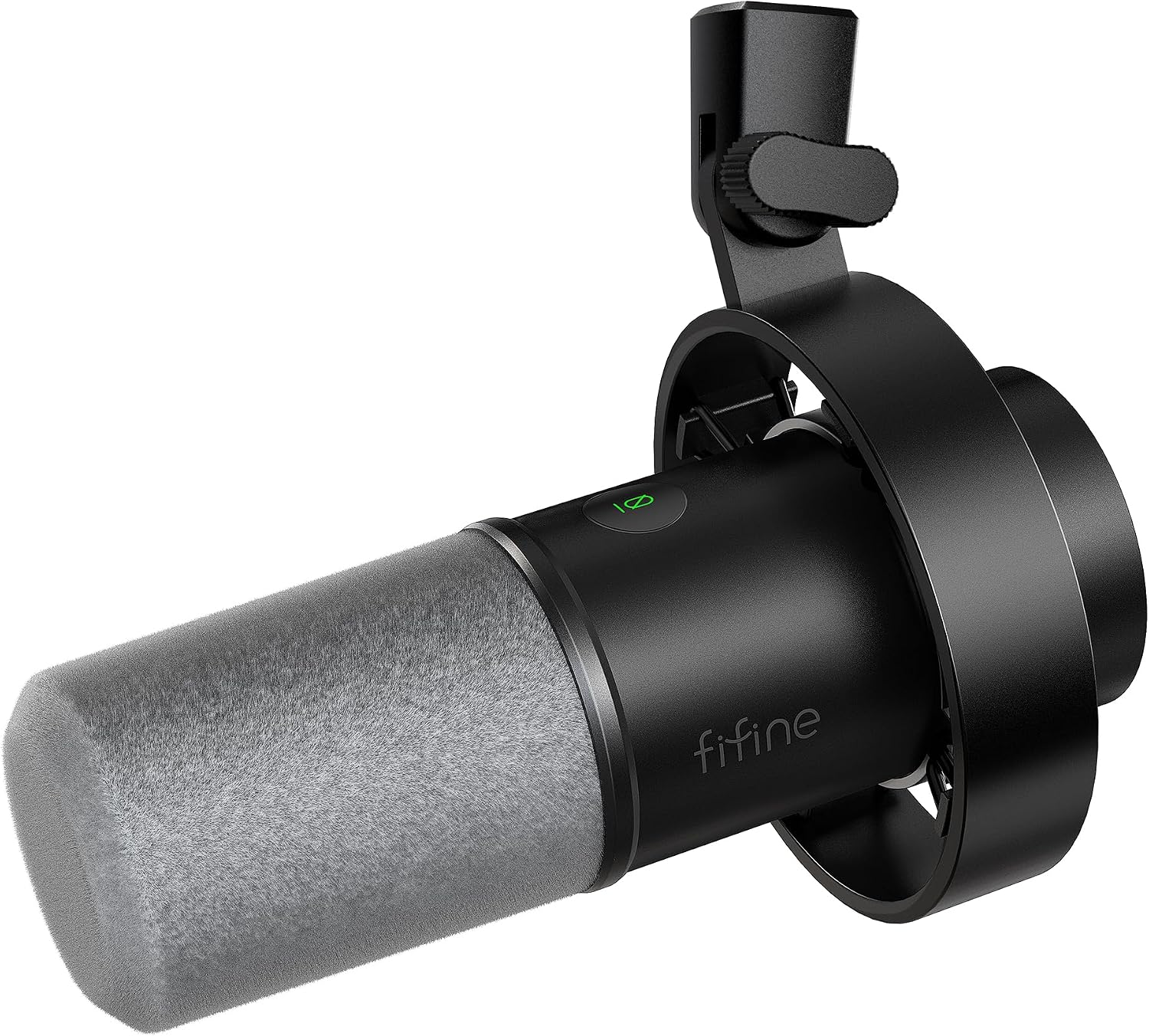
FIFINE AmpliTank K688 Dynamic Microphone, XLR/USB Podcast Recording PC Mic
Comes with everything you need, arm and all, for one flat price
Visit on Amazon →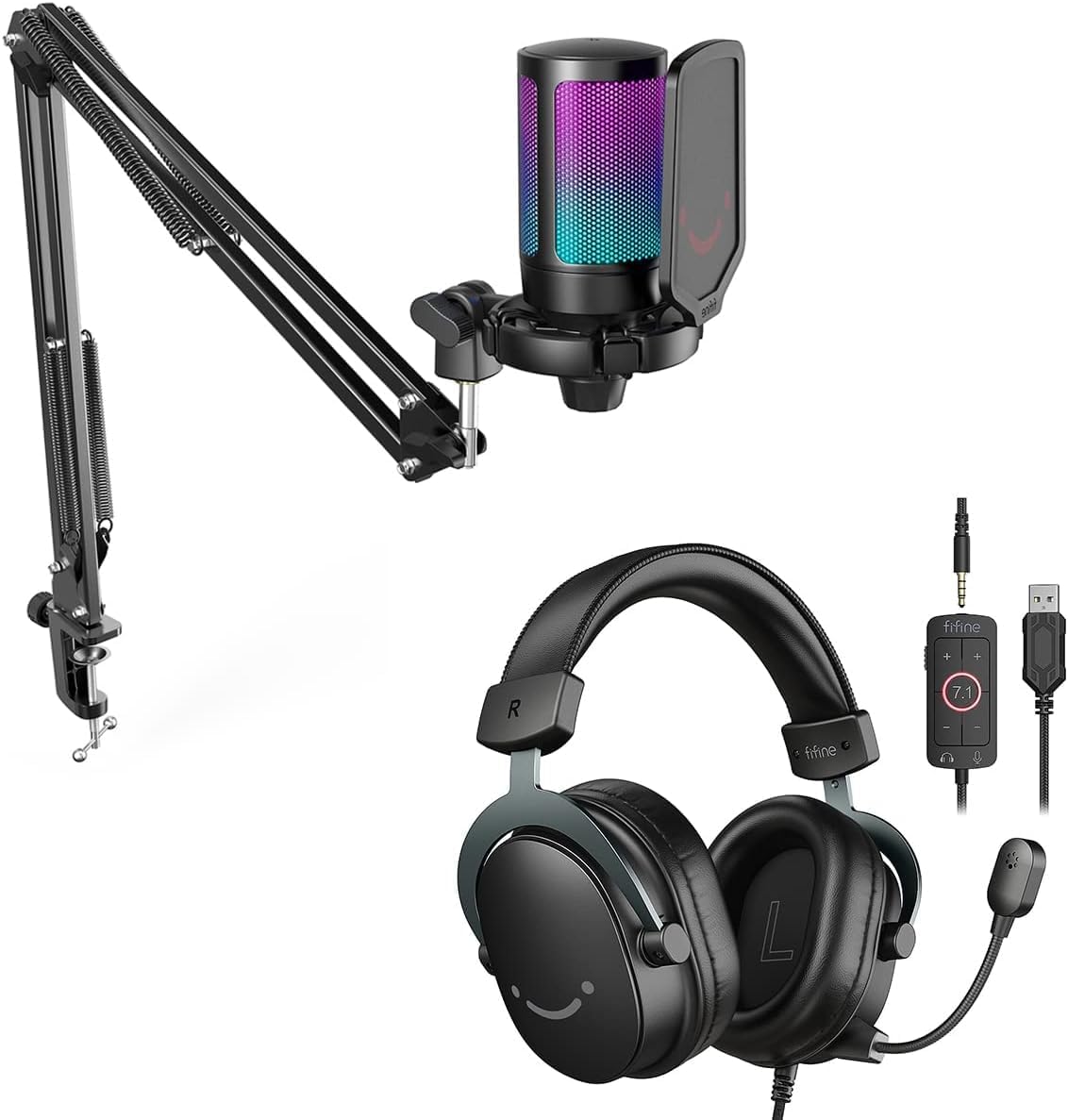
FIFINE Gaming Microphone & Headset Bundle: Computer Condenser RGB Mic with Arm Boom, PC Headset with 7.1 Surround Sound,Control Box, 3.5mm Jack for Streaming/Twitch/PS4/5 - A6T+H9
Condenser RGB mic with arm boom, headset included
Visit on Amazon →Logitech Creators Blue Yeti USB Microphone for PC, Mac, Gaming, Recording, Streaming, Podcasting, Studio and Computer Condenser Mic with Blue VO!CE effects, 4 Pickup Patterns, Plug and Play - Blackout
The Shure MV6 USB Gaming Microphone is designed for gamers, streamers, podcasters, and creators who want professional sound with easy setup. Featuring Voice Isolation Technology and a dynamic cardioid
Visit on Amazon →How I test
I test every mic two ways. First in my treated studio, where I can hear the true character of the mic. Then in my kitchen, which has tile floors, a refrigerator that kicks on every 20 minutes, and a window facing a busy street.
That's where most streamers actually record. I also run every take through my editing workflow: high-pass filter, de-esser, compression.
A mic that sounds fine raw but falls apart in the edit is not a good mic. Ringo, my 60-pound labradoodle, sleeps on the floor during these sessions.
When he shifts on the hardwood, I can hear it in the take. That's how I test vibration isolation too.
FIFINE AmpliGame AM8
The AM8 is the mic I recommend more than any other for streaming, and it's not close. The version I own has been through two years of daily use, including a drop onto a hardwood floor that would have killed a lesser mic.
It's a dynamic mic with a cardioid pattern, which means it picks up what's in front of it and ignores what's behind.
That's exactly what you need when your keyboard is two inches from the mic and your PC is humming behind it.
Visit on Amazon →
The included shock mount and pop filter are genuinely usable, which is rare at this price. I've had streamers tell me they can hear their mechanical keyboard clicks disappear when they switch to this mic. It won't pick up the cat in the background or the cars going by outside. That's the kitchen test, and it passes.
The catch is gain. It's a dynamic mic, so it's gain-hungry. If you use the USB output, the built-in preamp handles it fine. If you use XLR, you need an interface with at least 60dB of gain. I run mine through a Scarlett Solo and it's fine. The sound is slightly dark, a touch bass-heavy, but that's an EQ fix, not a dealbreaker. For ~$60, this is the best microphone for streaming that I've tested.
Shure MV6
I was skeptical of the MV6 when it arrived. A USB mic with built-in DSP that promises to fix your room? That's usually marketing nonsense. I've been using this for six months now, and I was wrong.
The MV6 is a dynamic mic with a cardioid pattern, which already puts it ahead of most USB mics for streaming. But the DSP is the real story. It applies a high-pass filter, a de-esser, and a compressor automatically. It works. I plugged it into my laptop, opened OBS, and the take was cleaner than what I get from some ~$500 setups in untreated rooms.
It's not perfect. The Denoiser software is basic, and the mic itself is plastic. At ~$159, you're paying for the DSP, not the build quality. But if you're a streamer who doesn't want to learn EQ, this is the mic that saves you. I've recommended it to three clients who record in their bedrooms, and all three stopped complaining about their audio. That's the highest praise I can give.
Logitech Blue Yeti
I have a love-hate relationship with the Yeti. I've owned one for eight years, and it's the mic that taught me the most about room acoustics. It's a condenser, so it picks up everything. Every keyboard click, every PC fan, every dog bark. When I started, I blamed the mic. Then I learned that the mic was just telling me the truth about my room.
Visit on Amazon →
The Yeti is still a solid choice if you know what you're doing. Multiple pickup patterns mean you can use cardioid for solo streaming and figure-8 for interviews. The build quality is excellent. I've dropped mine more than once and it still works.
But for streaming in an untreated room, a condenser is a handicap. You'll spend more time editing out clicks and hums than you will recording. The AM8 or MV6 will do the same job with less hassle. The Yeti is a classic, but it's not the best microphone for streaming in 2024.
FIFINE AmpliTank K688CT
This is the kit I recommend to people who want everything in one box. It comes with the mic, a boom arm, a shock mount, a pop filter, and a windscreen. The K688CT is a dynamic mic with a cardioid pattern, so it has the same noise rejection as the AM8. I've been using one for a year as my backup mic, and it's held up fine.
The sound is a bit brighter than the AM8, which some streamers prefer. It's less muddy, but it can be a touch harsh on the high end if you have a bright voice. EQ fixes that. The included boom arm is the weak point. It's functional but a bit wobbly. I replaced mine with a used Rode arm I found for ~$30, and that solved it.
At ~$80 for the whole kit, it's a bargain. You get a usable mic, a decent arm, and all the accessories for less than the price of a Yeti alone. If you're starting from zero, this is the easiest path.
FIFINE AmpliGame A6T
The A6T is a condenser, which puts it at a disadvantage for streaming in untreated rooms. I've owned one for about a year, and it's the mic I use for voiceover work where I want more detail than a dynamic can give. It's bright and clear, with a nice presence boost around 5kHz.
Visit on Amazon →
But for streaming, the condenser pickup pattern is a problem. It picks up the room. My kitchen test with this mic was rough. The refrigerator hum came through, the neighbor's dog came through, and the keyboard clicks were loud. If you have a treated room, this is a fine mic for the money. If you don't, it's a frustrating experience.
The mute button and volume knob on the front are nice touches. The build quality is typical FIFINE, which is to say solid for the price. But I can't recommend this as the best microphone for streaming unless you've already treated your room.
Shure MV7+
I resisted the MV7+ for a long time because of the price. ~$249 is a lot for a USB mic. Then I used one for a client who records a daily podcast in his home office, and I understood.
The MV7+ is the best dynamic USB mic I've tested. The auto-leveling feature is the standout. It adjusts gain in real time, so you never clip and you never get too quiet. That's a huge deal for streamers who lean back and forth. The sound is clear, with a nice presence boost that makes voices cut through. It's not muddy, it's not harsh. It's just good.
The downsides. The software is basic, though it works. The mic is heavy, which is fine on a boom arm but tiring in the hand. And it's ~$249. For that price, you could buy an AM8 and a decent interface and have money left over. But if you want a mic that just works, with no fiddling, the MV7+ is worth it.
What to actually buy
I don't track prices day to day, so I won't pretend to know next week's deals. What I know is what I've lived with. Choose the AM8 if you want the best balance of price, noise rejection, and sound quality.
Choose the MV6 if you want plug-and-play with built-in room correction. Choose the K688CT if you want everything in one box for one price.
Skip the Yeti and the A6T unless you've already treated your room.
The best microphone for streaming is the one that makes your stream sound clean without making you fight your environment. For most people, that's a dynamic mic with a cardioid pattern and enough gain. The AM8 is my pick. It's been on my desk for two years, and it's never let me down.