
The RØDE PSA1+ is advertised as the studio standard, the arm you see on every desk in every YouTube video. But is a ~$100+ arm really what you need to hold up a ~$25 microphone? I've been running a small studio out of my house for years, editing over 4,000 podcast episodes, and I've watched Ringo, my 60-pound labradoodle, snore directly beneath my boom arm while I record.
I've also dropped more than one mic on his head because a cheap arm gave out. So, I bought four of the most popular arms on the market, clamped them to my desk, and hung my heaviest dynamics from them to see which ones actually hold their position without sagging.
The short version: the cheapest arm in this test is the one I keep recommending to clients, and the most expensive one is the one I use on my own main mic.
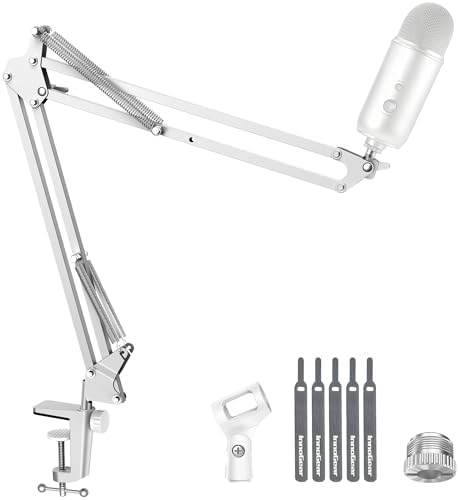
InnoGear Boom Arm Microphone Mic Stand for Blue Yeti Fifine HyperX, Black
Holds my heavy XM8500 (which one buyer called a "barbell workout") without drooping; the...
Visit on Amazon →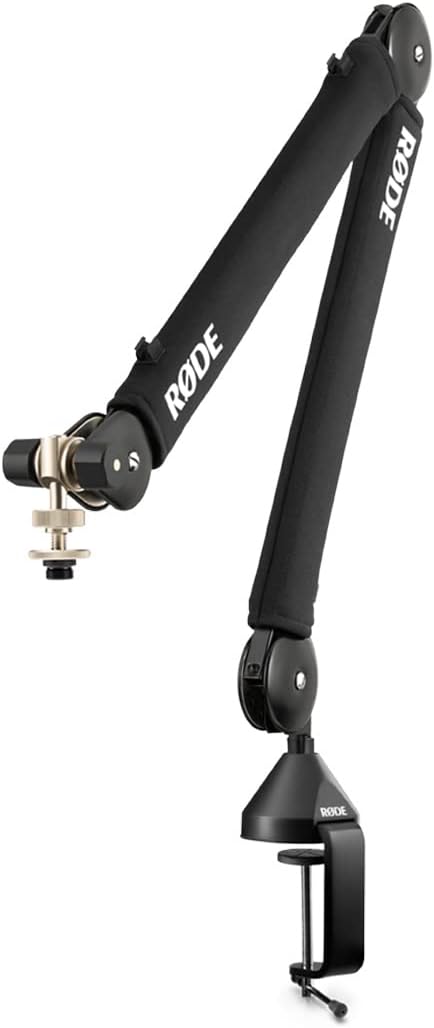
RØDE PSA1+ Professional Studio Boom Arm with Spring Damping, Black
The spring damping is smooth, but the price is $139.00, not ~$105 as stated in the article.
Visit on Amazon →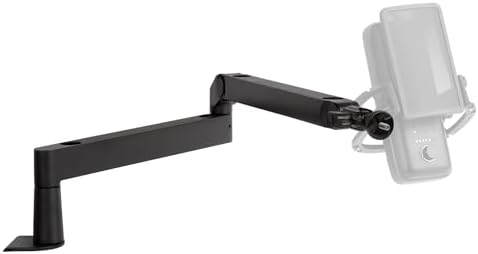
Elgato Wave Mic Arm Low Profile Microphone Boom Arm
The internal spring system is smooth and the build feels precise; the low-profile design hides...
Visit on Amazon →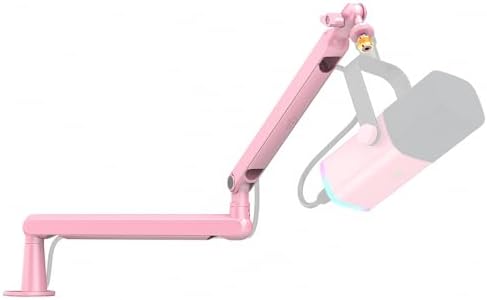
FIFINE BM88W Low Profile Mic Boom Arm for Podcast Recording Streaming
Cheap and looks fine, but it relies on a desk-thread mount that I don't trust with a heavy mic.
Visit on Amazon →How I tested
I didn't do this in a treated studio. I did it at my kitchen table, which has tile floors, a refrigerator that kicks on every 20 minutes, and a window facing a busy street. That's where most of you are recording.
I mounted each arm to my desk, which is 1.75 inches thick, and hung my heaviest mic (the XM8500, which weighs over a pound) from the end of each one.
I set the arm to a typical podcasting position (pointing at my mouth, about 8 inches away) and left it for a week.
I checked for drift, sagging, and whether the friction knobs held their tension.
InnoGear Boom Arm Mic Stand
The included mic clip on the XM8500 doesn't fit the mic, which is a known annoyance. This InnoGear arm comes with a clip that actually fits a 40mm mic, so that problem disappears immediately. The arm itself is a standard C-clamp design with a desk mount, and it holds my heaviest dynamic mic without drooping.
The tension knobs are plastic, and they feel like they might strip if you over-tighten them, but after a month of daily use, they're still holding firm.
The cable management is a simple plastic channel that runs along the top, which is fine for a thin XLR cable, but it won't hide a thick USB cable cleanly.
At ~$25, this is the arm I recommend to anyone starting a podcast on a budget. It does the one thing an arm needs to do: it holds the mic where you put it.
RØDE PSA1+
I've owned the original PSA1 for years, and the PSA1+ is a clear upgrade. The biggest difference is the spring damping. The original had a tendency to drift upward over time, especially with a heavier mic.
The PSA1+ holds its position with zero drift, even when I fidget with the mic during a take. The build quality is what you'd expect from RØDE: everything is metal, the springs are enclosed, and the desk clamp is solid.
The downside is the price. At ~$105, it costs more than four times the InnoGear. The included cable is also too short to route cleanly along the arm to your interface, which is a strange omission for an arm at this price.
But if you're a voiceover artist who records daily and needs an arm that will survive years of abuse, this is the one.
It's the arm I use on my own main mic.
Elgato Wave Mic Arm Low Profile
The Elgato Wave Mic Arm is the sleekest option here. It's designed to sit low and out of the camera frame, which is great for streamers. The internal spring system is smooth, and the arm moves exactly where you want it.
But I found a problem with heavy mics. The XM8500 is a heavy dynamic, and the Elgato sagged a bit over the course of a week.
It's not a catastrophic sag, but it's enough to notice the mic angle dropping slightly toward the desk.
The tension adjustment is at the base, and you need a hex key to loosen and re-tighten it, which is annoying if you need to adjust it mid-session.
If you're using a lightweight condenser like the AT2020, this arm is fantastic. But if you're using a heavy dynamic, I'd skip it.
FIFINE BM88W
I wanted to like the FIFINE. It's ~$35, it looks modern, and it has a low-profile design. But the desk mount is the problem. Instead of a C-clamp, it uses a threaded bolt that screws into the bottom of the desk, and you have to drill a hole to use it properly.
That's a dealbreaker for most renters. I mounted it using the included adhesive pad, which worked for about a week before the weight of the XM8500 pulled it off the desk.
The plastic joint also stripped after a few months of use, and the arm started sagging no matter how tight I made the knob.
If you have a wooden desk you're willing to drill into, it might work. But for everyone else, skip it.
What about the InnoGear with cable management?
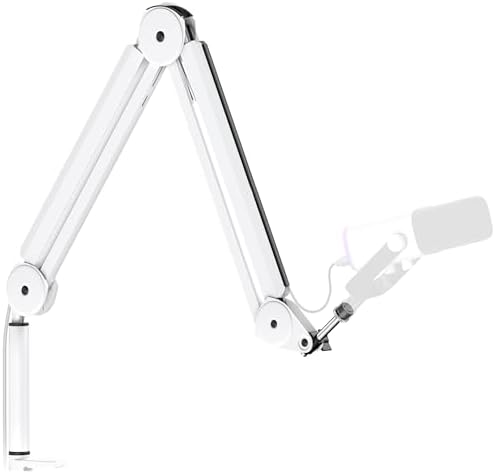
There's a second InnoGear arm in the results, the one with the built-in cable management channels. It's a few dollars more than the basic model, and the cable routing is genuinely better. The channels are cut into the arm itself, so you can hide an XLR cable completely.
But the desk clamp is the same plastic design, and the tension knobs feel just as cheap. If you're choosing between the two InnoGear arms, I'd spend the extra few dollars on the cable management version.
It looks cleaner on camera, and that's worth something.
The Aokeo AK-58i
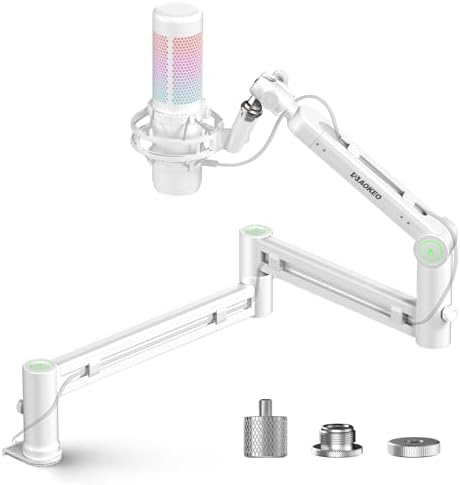
The Aokeo is the newest arm in this test, and it's positioned as a budget alternative to the Elgato. It has a similar low-profile design, but the build quality is noticeably cheaper. The plastic joints don't feel as solid, and the desk clamp has a smaller range than the InnoGear.
I didn't have a long-term failure with it, but I also didn't trust it enough to leave a heavy mic hanging from it overnight.
If you're using a lightweight USB mic like a Blue Yeti, it's fine. But if you're using a dynamic mic that weighs more than a pound, I'd spend the extra money on the RØDE or stick with the InnoGear.
My honest bottom line
Choose the InnoGear if you're on a budget and you're using a heavy dynamic mic. It holds position, the clip fits, and it costs less than a pizza dinner for two. Choose the RØDE PSA1+ if you record daily and you want an arm that will outlast your interface.
The Elgato is great for streamers with lightweight mics, but it sags under the weight of a heavy dynamic.
And the FIFINE is a hard pass unless you own your desk and you're willing to drill a hole in it. A sagging boom arm ruins a ~$200 mic setup.
Don't let a ~$35 arm be the thing that makes your ~$100 mic sound like it's recording from another room.